
Jonite
At A Glance

50%
Client Testimonial

Backstory
Backstory
Their primary goal is to close deals but what are companies doing to help their sales team achieve that and sell more efficiently?
Here’s how we at Brew Interactive helped one of our clients achieve a high sales revenue with the help of HubSpot’s Sales Enablement tools.
Our client, Jonite has been the leading manufacturer of innovative and decorative architectural stone grating products for over 25 years.
Known to be the perfect marriage of aesthetics and performance, Jonite takes pride in bringing their transformational design visions to life, while staying true to their sustainability commitment.
They primarily work with landscape architects, developers, and construction firms, offering a vast range of innovative products and custom design solutions. Headquartered in Singapore, their clients are based across the US, Middle East and Asia
Challenge
Used Google
Spreadsheets to
Manage Sales Data
They did not have a CRM software system in place. They were managing and tracking their sales process using Google spreadsheet.
This was an unproductive practice because there was no proper control over data and the absence of a standardized sales process lead to missed opportunities.
It also made it difficult to collaborate with the marketing team and integrate sales data to an email platform (they were using MailChimp at that time) and other business tools. This resulted in the marketing and sales teams working in silos and not collaborating with each other – a crucial factor that affected business growth.
The company was in dire need of a consistent sales process that would help their sales team close deals and convert more leads efficiently.
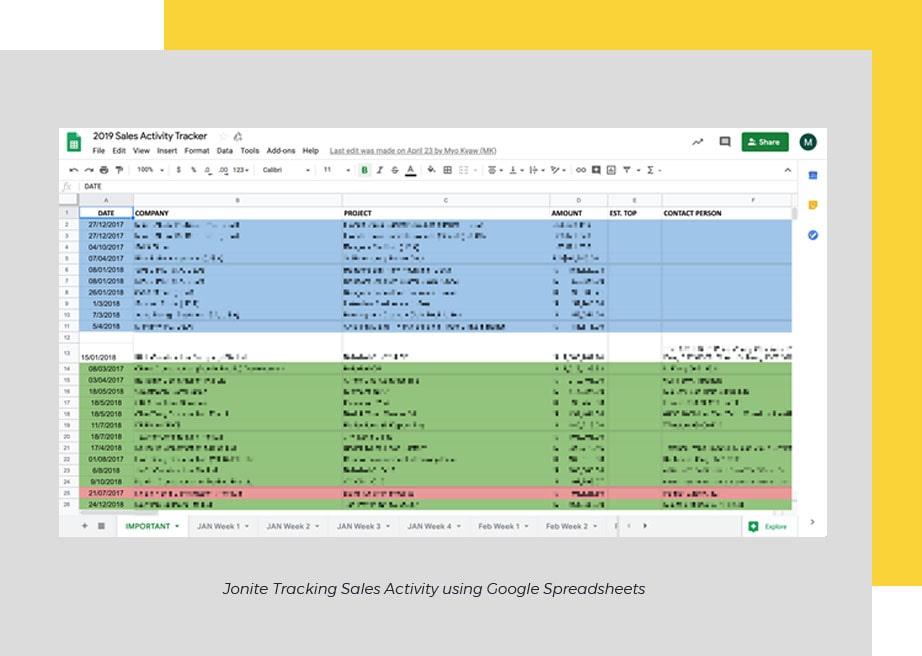
Used Google Spreadsheets to Manage Sales Data
They did not have a CRM software system in place. They were managing and tracking their sales process using Google spreadsheet.
This was an unproductive practice because there was no proper control over data and the absence of a standardized sales process lead to missed opportunities.
It also made it difficult to collaborate with the marketing team and integrate sales data to an email platform (they were using MailChimp at that time) and other business tools. This resulted in the marketing and sales teams working in silos and not collaborating with each other – a crucial factor that affected business growth.
The company was in dire need of a consistent sales process that would help their sales team close deals and convert more leads efficiently.
Misinformed Brand Perception
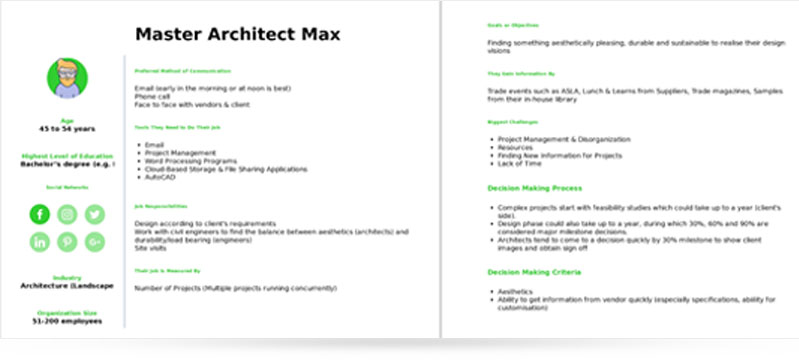
We conducted interviews with their customers (landscape architects) to understand their demographics, pain points, goals and decision making process.
These were the two buyer personas we narrowed down to:
While landscape architects in Singapore admitted that Jonite immediately comes to mind, they felt that it had a more rustic feel rather than a modern and contemporary one. Interestingly, landscape architects in the US felt the exact opposite – they agreed that Jonite had a modern and cutting-edge design.
This was one of their challenges – to change the perception of their brand in the minds of the landscape architects in Singapore. Their portfolio of products and design solutions were bold and modern, and they wanted it to translate to their potential audience.
On probing further, we realized that landscape architects in Singapore felt the way they did because of Jonite’s website design.
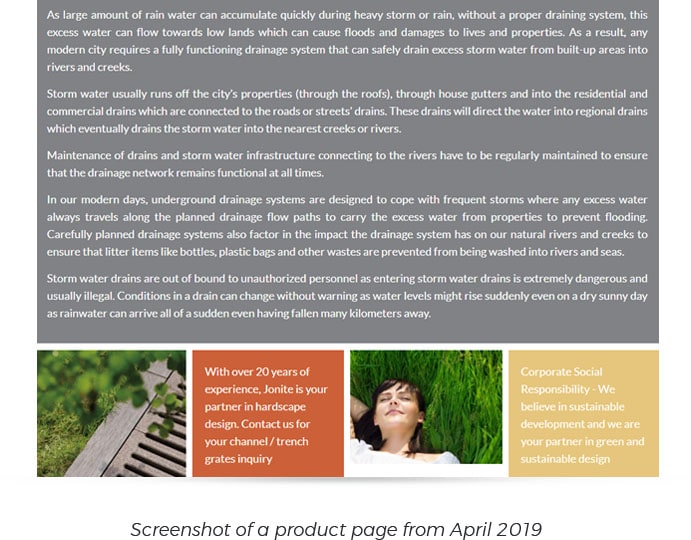
The website was filled with blocks of text, with poor readability and very few visuals. Such a design was not doing justice to the wide range of products they offered or imparting value to the landscape architects who wanted to envision what the stone grating designs looked like.
So, while this strategy helped optimize their website for SEO, we realized that those efforts were in vain because in spite of attracting traffic, they were unable to convert that traffic into leads.
Solution
Solution
The first step was to move from Google spreadsheet to HubSpot CRM.
The spreadsheet just had basic customer data such as company name, project, amount, completion data, follow-up date and telephone number. There was no clear indication of which sales rep is assigned to which lead which made it difficult to track performance and hold people accountable.
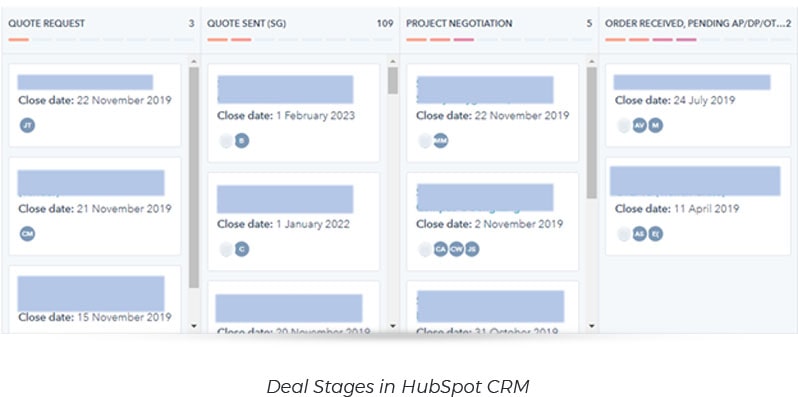
We implemented three sales pipelines in HubSpot CRM – Singapore, USA and overseas sales. After consulting with the team, we created new deal stages such as quote request, quote sent, project negotiation, order received, project production, closed won and closed lost.
We also established the qualification criteria for each of the stages and the handoff process in the sales team.
Doing this made it easier to organize data and track progress. This helped us get a complete view of the ongoing sales conversations and their respective stakeholders from one central location.
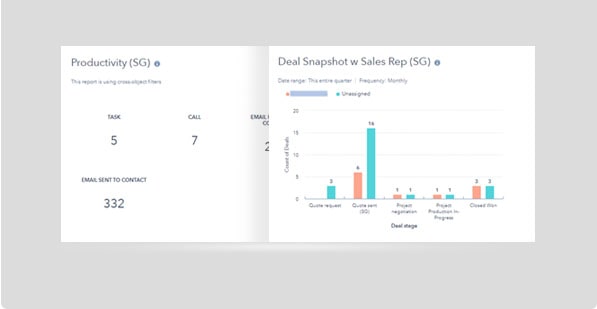
Data is useless without reporting – keeping that in mind, we built sales reports so we could derive insights, assess gaps and optimize the sales team’s performance.
These are the reports we focussed on –

Team Activity
includes calls, emails, and tasks logged by
the team members.
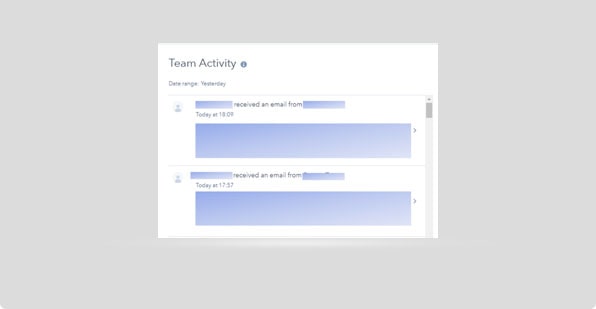

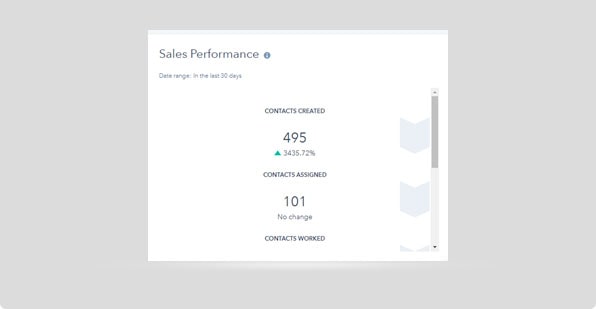
Sales performance
particularly the contacts that have been
worked by sales reps and number of deals
created and closed won.

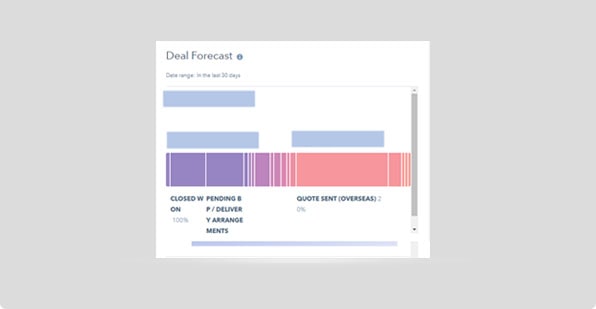
Deal Forecast
each stage of the deal pipeline. This is an
important report which helped in budget
planning

Sales productivity
calls, emails, meetings, notes, and tasks the
team has logged
Call and Email Integration
We would also get notified as soon as a lead would open an email or download an attachment which was useful in doing timely follow-ups.
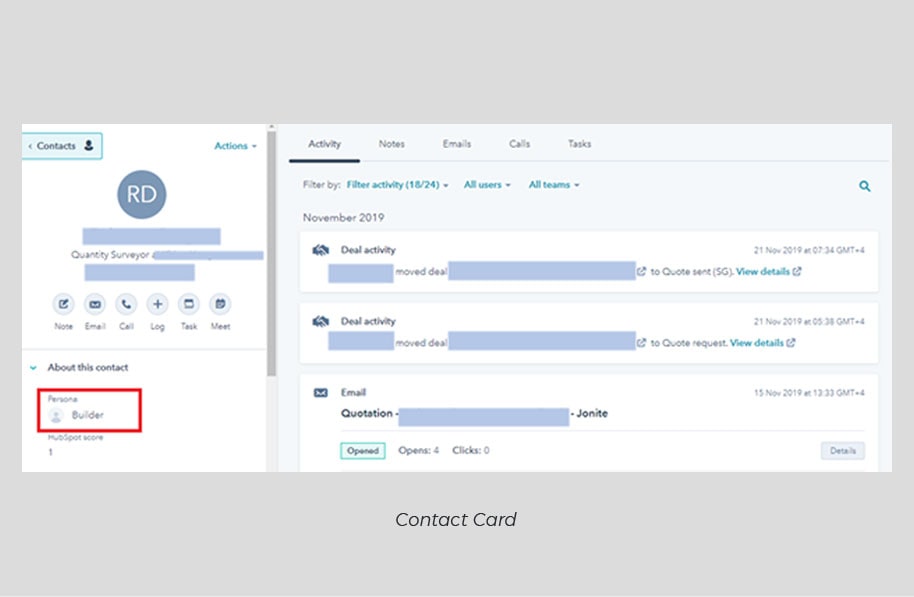
Here’s an example of a contact card of one of the builders. We also assigned buyer persona and lead scores to every contact, helping us get a better perspective.
Call and Email Integration
We would also get notified as soon as a lead would open an email or download an attachment which was useful in doing timely follow-ups.
Here’s an example of a contact card of one of the builders. We also assigned buyer persona and lead scores to every contact, helping us get a better perspective.
Established a Consistent Follow Up Process
Depending on the client’s project and other moving factors, Jonite’s sales cycle would range from 1 month to 2 years. We wanted to accelerate the sales cycle due to which was established a consistent follow up process by implementing two key strategies:
Enabled real-time notifications

Created a workflow sequence
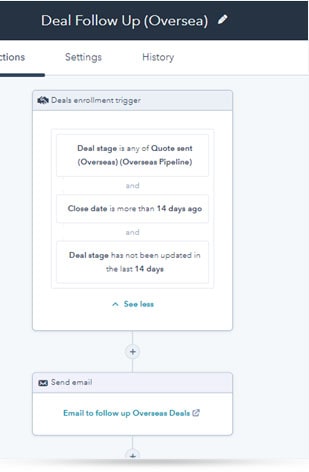
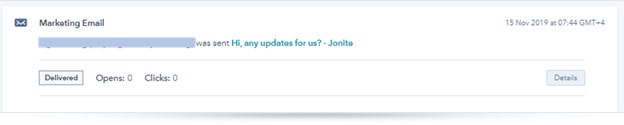
This specifies that if a deal has not taken any action for 14 days, a follow up email will be triggered.
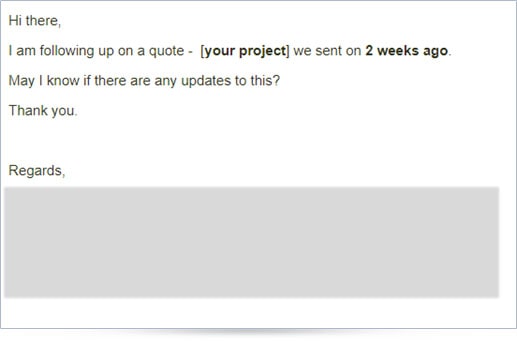
The email was fairly straightforward and intended to check if they had any updates after having received the quote.
That’s not all, we could also view the email open rate and understand which recipients opened the email.
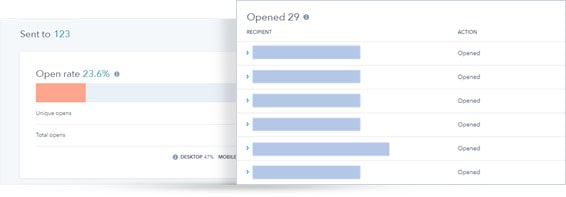
Let’s take a look at another example of efficient follow up and see the change in the contact’s journey.
This is a contact who arrived on the website via organic search, filled out a form and became a marketing qualified lead on 1st October.
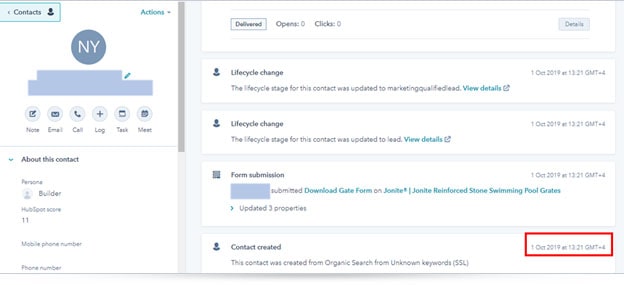
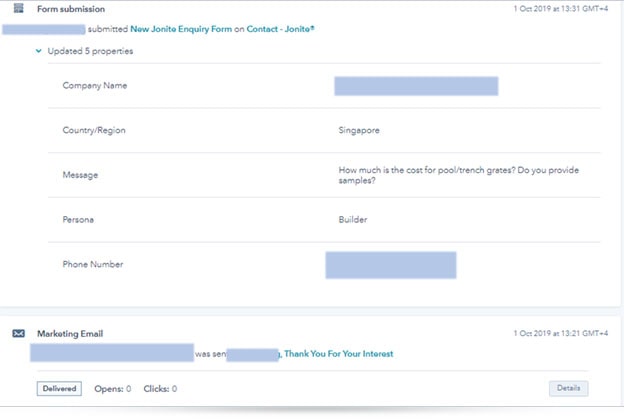
We sent him a marketing email, thanking him for his interest which led him to fill the enquiry form and leave his phone number, changing his lifestyle stage to sales qualified lead.
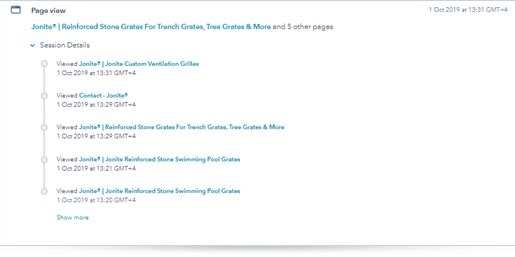
We were able to see which pages the lead viewed on 1st October.
There was an exchange of emails between over the next couple of weeks wherein quotes and catalogues were shared. After having not heard back till 15th November, a follow up email was automatically triggered to the lead, which was replied to soon after.
Results
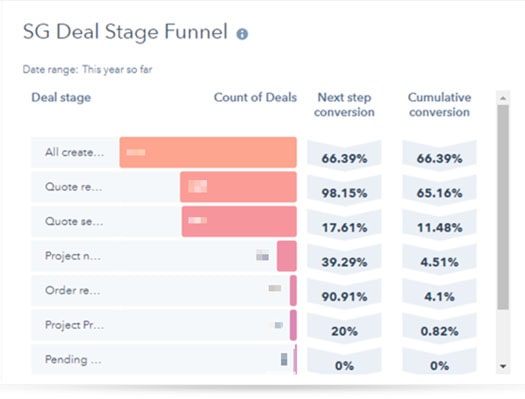
Follow ups became more consistent, timely and relevant which resulted in sales reps closing deals more effectively and efficiently.
That’s not all, through the Sales Productivity dashboard, we got better visibility on every sales rep’s performance and could assess where exactly they were leaking in the funnel to take corrective measures.
According to the client, all of these efforts have contributed to Jonite’s achieving an estimated 50% increase in sales efficiency.

Our Approach
When Collectius came to us with significant gaps in their SEO expertise and online visibility, we tailored a comprehensive approach that was designed to overhaul their digital presence and drive measurable improvements. Here's how we proceeded:
- SEO Audit: An on-page and off-page SEO audit was conducted to identify areas for improvement
- Google Search Console Installation: Google Search Console was installed on the Collectius website to monitor and track their analytics
- Digital Content Strategy: We produced a digital content strategy pack to help Collectius enhance their SEO goals
- Backlink Acquisition: Backlinks were purchased to improve Collectius' domain ranking Keyword Research: Extensive keyword research was performed to align content and SEO strategies with relevant search trends
Comprehensive SEO Audit
We initiated our process by conducting a detailed SEO audit for Collectius. This audit was crucial in pinpointing several critical areas where the company was underperforming.
Key issues we found included suboptimal keyword utilisation, missing meta descriptions, and poorly optimised content that wasn't fully aligned with target search queries.

Having identified areas for improvement, the Brew team worked with Collectius’ web development team to implement these fixes.

Following the initial SEO audit, we conducted a focused technical SEO audit for Collectius. A technical SEO audit is a thorough examination of a website’s technical infrastructure as it relates to its visibility and performance in search engines.
It evaluates several key elements, including site architecture, page speed, mobile-friendliness, indexing, crawlability, security, and use of technologies that may impact search engine access and efficiency.

This was a critical step to ensuring that the website’s infrastructure met modern search engine standards, which is pivotal for improving search rankings and user experience. Our audit revealed several key technical issues that needed immediate attention:
Slow Loading Speeds: We identified that the Collectius website had slower than optimal loading times. Slow speeds can significantly affect user experience and negatively impact search engine rankings. To address this, we optimised image sizes, minimised the use of blocking JavaScript, and implemented more efficient caching policies to enhance page load performance.
The Lack of a Sitemap: The absence of a sitemap was another critical gap. Sitemaps are essential as they help search engines more intelligently crawl the site and understand its structure. We created and submitted a comprehensive sitemap to Google, which facilitated better indexing of the website’s pages.
Mobile Optimization: Our audit also found that Collectius’ website was not optimised for mobile users. The Brew team provided detailed guidance to Collectius' web development team on best practices for mobile optimization going forward. This included advice on implementing accelerated mobile pages (AMP), optimising button sizes and touch targets, and ensuring text readability without requiring zoom.

Tracking & Monitoring of Collectius’ Web Performance
To better monitor and track the effectiveness of our strategies, we installed Google Search Console (GSC) on Collectius’ website. GSC allows us to gain valuable insights into the site's traffic, search performance, and any crawling errors, thereby enabling us to make data-driven decisions.
With data from GSC, we can identify which pages are performing well and which might require further optimization. This helps us refine SEO strategies and target specific issues with precision.
Digital Content Strategy
Recognizing the importance of content in SEO success, we crafted a comprehensive digital content strategy pack specifically tailored to Collectius' needs.
This strategy involved developing four customer personas and two end-user personas, representing the diverse segments of Collectius' audience. These personas helped us understand the distinct needs, behaviours, and preferences of different user types that interact with Collectius' services.

From this foundation, we were able to pinpoint the types of content and topics that would resonate most strongly with each persona. Leveraging these insights, we developed a series of SEO-optimised articles.
Each article was carefully written by our copywriter who made sure that keywords used were relevant with Collectius’ offerings and aligned with the interests of potential clients.

Taking this approach allowed us to attract more organic traffic to their site and significantly enhance visibility for these targeted search terms.
Backlink Acquisition
To strengthen Collectius’ domain authority and improve their search engine ranking, we strategically acquired high-quality backlinks. This effort was aimed at boosting their profile against competitors and increasing the trustworthiness of their site in the eyes of search engines.
Through our targeted backlink acquisition efforts, we gradually improved the organic traffic to Collectius' site.
As their domain authority increased, so did their visibility in search engine results, leading to more visitors naturally finding their way to the website without the need for paid advertising.
This steady increase in organic traffic not only enhanced their online presence but also contributed to higher engagement and conversion rates.
Outstanding SEO Results for Collectius
Our comprehensive SEO strategy delivered impressive results for Collectius, significantly enhancing their online visibility and search engine performance. Here are some of the key achievements:
Significant Traffic Growth
Over a period of six months, we achieved more than a 60% increase in organic traffic to Collectius' website. This surge in visitors was a direct result of our focused improvements in SEO practices and content strategies.

Expanded Keyword Reach
There was over a 70% increase in the number of organic keywords that Collectius ranks for on Google. This expansion in keyword coverage helped broaden their visibility and reach a wider audience interested in debt collection and financial services.

Top Rankings in Local Searches
Collectius' website achieved first-page rankings on Google's Search Engine Results Pages (SERPs) for targeted searches in Singapore and Malaysia. Ranking on the first page for relevant searches significantly boosted their brand's visibility and accessibility in these key markets.

Recent Case Studies



Want similar results?
Get in touch to see how we can help.
BREW INTERACTIVE
Digital Marketing Agency in Singapore and Malaysia
SERVICES
SERVICES
- Search Engine Optimisation - SEO
- Digital Reputation Management
- Account Based Marketing
- B2B Marketing Agency
- AI Lead Generation
- AI Automation Agency
- Content Marketing
- Social Media Marketing
- Baidu
- Xiao Hong Shu
- Digital Marketing PSG Packages
- Sustainability and ESG Marketing Agency
- Financial Services and Fintech Marketing Agency
- Software as-a-Service (SaaS) Marketing Agency
- Technology Marketing Industry
- Healthcare Marketing Agency
- Education Marketing Agency
SUBSCRIBE
CONTACT US
Singapore Office:
111 North Bridge Road, #08-11, Singapore 179098 Malaysia Office:
Level 5, Guoco Tower, 6 Jalan Damanlela, Damansara City, Bukit Damansara, 50490, Kuala Lumpur
© Brew Interactive 2026. All rights reserved.